Thé Mugicha vs Lait d'Amande
We scientifically analyze the biological properties of Thé Mugicha and Lait d'Amande. Review the differences in macronutrients, vitamins, minerals, and our final nutritional verdict.

| Nutriment / Mesure | Thé Mugicha (100g) | Lait d'Amande (100g) |
|---|---|---|
| Calories | 0 kcal | 40 kcal |
| Protéines | 0.1g | 1g |
| Lipides / Graisses | 0g | 2.5g |
| Glucides | 0g | 1g |
| Fibres Alimentaires | 0g | 0.5g |
| GIIndex Glycémique | 0 | 30 |
| Teneur en Eau | 99.9% | 95% |
Verdict Nutritionnel
Based on nutrient-density scores (highly bioavailable proteins, soluble prebiotic fiber, and balanced glycemic metrics), Lait d'Amande is programmatically rated superior for structural cellular health.
Thé Mugicha
Le thé mugicha, fait à partir d'orge grillée, est une boisson sans caféine populaire au Japon, connue pour sa saveur de noisette et ses qualités rafraîchissantes. Il est riche en antioxydants et a été associé à divers bienfaits pour la santé.
Lait d'Amande
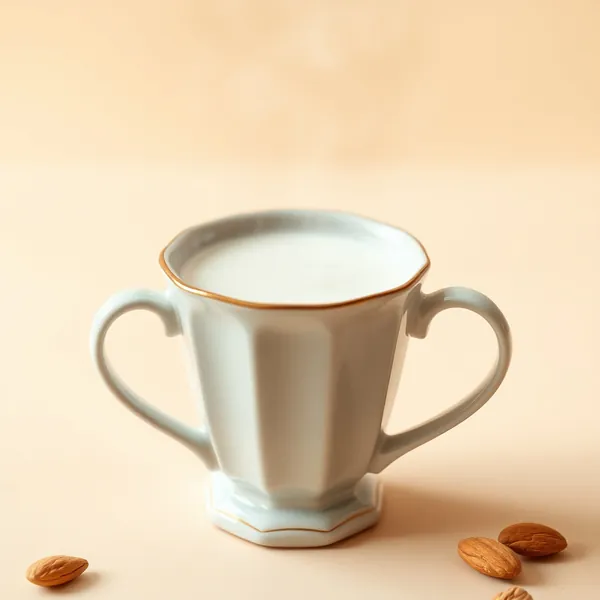
Le lait d'amande est une boisson végétale faite d'amandes moulues et d'eau, connue pour sa texture crémeuse et son goût de noix. C'est une alternative populaire aux produits laitiers, riche en vitamines et minéraux, notamment en vitamine E et en calcium.