Candied Strawberry vs Acerola
We scientifically analyze the biological properties of Candied Strawberry and Acerola. Review the differences in macronutrients, vitamins, minerals, and our final nutritional verdict.

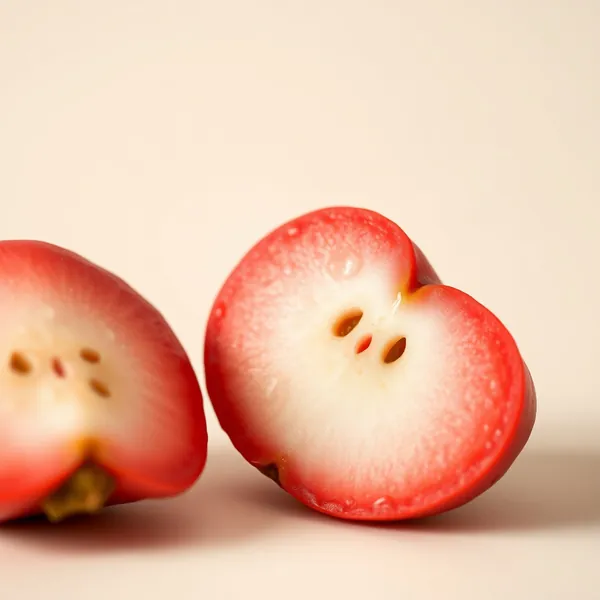
| Nutrient / Metric | Candied Strawberry (100g) | Acerola (100g) |
|---|---|---|
| Calories | 250 kcal | 50 kcal |
| Protein | 0.5g | 0.5g |
| Fats | 0.1g | 0.2g |
| Carbohydrates | 65g | 12g |
| Dietary Fiber | 2g | 1g |
| GIGlycemic Index | 60 | 25 |
| Water Content | 15% | 90% |
Nutritional Verdict
Based on nutrient-density scores (highly bioavailable proteins, soluble prebiotic fiber, and balanced glycemic metrics), Acerola is programmatically rated superior for structural cellular health.
Candied Strawberry
Candied strawberries are strawberries that have been preserved by coating them in sugar or syrup, enhancing their sweetness and shelf life. They provide a concentrated source of sugars and can be enjoyed as a sweet treat or used in various desserts.
Acerola
Acerola, also known as the Barbados cherry, is a small, bright red fruit rich in vitamin C and antioxidants, known for its health benefits and tart flavor.